The Walking Dead: Season One
- 4.2
- Rating
- 10.00M
- Installs
- Free
- Price

 Analysis by App-foxy
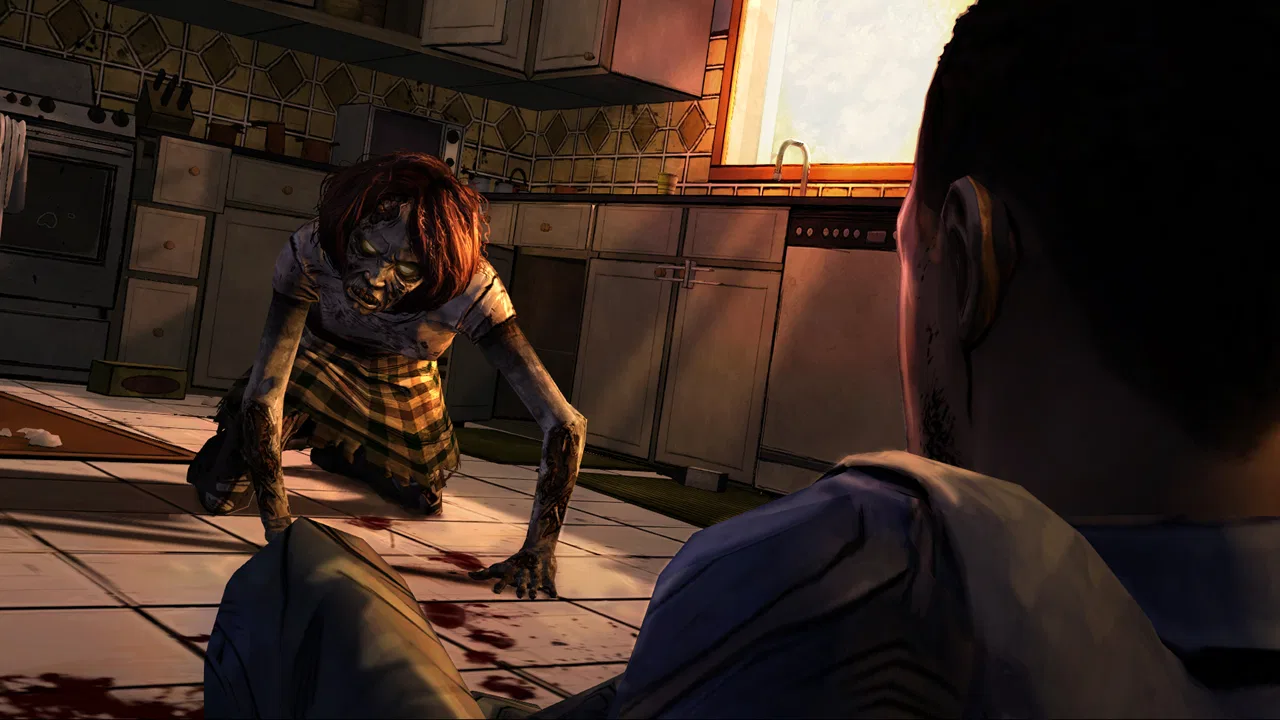
The Walking Dead: Season One is the kind of adventure game I start for a few minutes and then keep playing because one conversation leads directly into another difficult choice. It is built around the world of The Walking Dead, but its appeal is less about constant combat and more about deciding whom to trust, how to respond under pressure, and living with the emotional weight of those decisions. I found it most effective when I treated it like an interactive drama rather than a traditional action game.
As a free game from Skybound Game Studios, Inc, it is an easy recommendation for players who want a story-led experience on a phone or tablet. The Mature 17+ rating matters, though: the game deals with violence, danger, grief, and tense adult themes. It is not a casual zombie game for every age group, and it is not designed to be relaxing background entertainment. When I played, the strongest moments came from paying attention to people, not simply reacting to walkers.
How the first action pulls you into the story
The opening interaction establishes the game’s main strength quickly. Instead of giving me a large map full of icons or a complicated skill tree, it placed me in a situation where a spoken answer or a small action carried immediate social meaning. That first decision taught me how to play: listen closely, notice what is happening around the characters, and understand that hesitation can be a decision too.
You May Also Like

 Pandora - Music & Podcasts
Pandora’s Music Is Easy to Start, but Harder to Recover
Pandora’s strength is its low-effort path from a seed to a station. Its weak spot is how much confidence it asks you to place in connection, setup, and quiet recovery.

 8 Ball Pool
 Is Built on Rivalries, Rematches, and Routine
A close look at the rivalries, rematches, shared routines, and unanswered safety questions that turn a quick pool match into a persistent mobile community.

 Samsung Music
’s Quiet Strength Is Playing What You Already Own
Its reach comes less from spectacle than from dependable access to a personal library. That simplicity is both the app’s strongest retention engine and its ceiling.

 AccuWeather: Weather Radar
AccuWeather Review: A Quick, Clear Forecast for Everyday Decisions
For everyday plans, the best forecast is the one you can understand quickly. AccuWeather makes rain timing, radar, and local conditions easy to act on, with a few trade-offs.

 Hill Climb Racing
Why Hill Climb Racing Still Turns Crashes Into One More Run
A tiny car, a bumpy hill and one more upgrade: Hill Climb Racing keeps resurfacing because its simple chaos makes every near-miss feel personal.

 AliExpress - Shopping App
AliExpress Makes Global Shopping Feel Personal, but Shoppers Bear the Risk
AliExpress turns a global marketplace into a pocket-sized discovery engine. Its reach is useful, its shopping loop compelling, and its trade-offs easy to miss.
More From Our News Desk
View All News


The controls are intentionally approachable. I could move through scenes, inspect objects, interact with people, and respond during urgent moments without learning a large collection of commands. This simplicity is useful on a touchscreen because the game does not ask me to perform console-style combinations with awkward virtual buttons. The trade-off is that experienced action players may find the physical gameplay light. The focus is clearly on timing, attention, and judgment.
My first useful tip is to slow down whenever the game gives you room to explore. It is tempting to rush toward the obvious objective, especially after a tense exchange, but looking around can reveal context that changes how a scene feels. I also recommend reading character reactions rather than choosing dialogue only because it sounds heroic. A response that seems kind in isolation may create a different kind of pressure a moment later.
The story follows Lee Everett as he tries to survive the collapse of ordinary life. His relationship with Clementine gives the adventure its emotional center, and that relationship makes routine actions feel more important than they would in a standard monster game. Searching a location, speaking to a survivor, or deciding who receives help can all connect back to the question of what kind of person Lee is becoming.
This is where the game differs from many mobile adventure alternatives. A typical zombie title may reward faster aiming, stronger equipment, or a longer survival streak. Here, the immediate reward is often information or trust. I might learn what another survivor fears, discover a contradiction in someone’s story, or understand why a group is about to split. The game turns conversation into a form of investigation.
The feedback rhythm: action, reaction, and pressure
The core loop is easy to describe but unusually effective. I take an action, the game shows me a reaction, that reaction changes the emotional situation, and I begin the next scene wanting to see the consequence. A dialogue choice can alter the mood of a group. A delayed response can make another character feel ignored. A decision made during danger can stay in the background long after the immediate threat has passed.
That feedback is not always presented as a clear score or a visible meter. Instead, it appears through changed conversations, altered attitudes, and the way later moments feel after something has happened. I appreciated this because it made the world seem less like a checklist. The game does not need to announce every result for me to understand that people noticed what I did.
There is a practical way to get more from this system: choose responses that match the character you want Lee to be, then accept the consequences. I initially tried to search for the perfect answer in every exchange, but that made the experience feel artificial. The stronger approach is to commit to a viewpoint. If you always attempt to keep everyone happy, you may create indecision; if you speak bluntly, you may gain clarity while damaging trust.
Quick-time action sequences add a different kind of feedback. They interrupt conversation with urgency and ask me to respond before the danger closes in. These sections prevent the story from becoming entirely passive, but they do not transform the game into a full action title. I found them most successful when they reinforced panic and confusion rather than when they simply tested reflexes.
Touchscreen play can make these moments more sensitive than expected. My advice is to keep the device steady and watch for the prompt itself instead of tapping where I assume it will appear. If you are playing on a smaller screen, visual attention matters more than speed. The game’s dramatic timing can be undercut if a finger covers the area where the next instruction appears.
The feedback rhythm also explains why the game can feel uncomfortable in a productive way. There are moments when no answer seems completely good. Helping one person may expose another to risk, and telling the truth may create a problem that a convenient lie would postpone. The game’s best writing does not treat these situations as puzzles with one correct solution. It makes me ask which cost I am willing to accept.
What counts as a reward in this adventure
The main reward is not a new weapon or a stronger character. It is a deeper understanding of the group and a clearer sense of how my choices shaped the journey. I became invested in small details because the game made personal connections matter. A conversation that seemed minor at first could influence how I interpreted a later argument or danger.
That structure suits players who enjoy narrative consequences, but it can disappoint anyone expecting a large progression system. There is no need to grind for experience before attempting the next story beat. The reward comes from moving the plot forward and seeing how the characters respond. I found that refreshing after playing mobile games built around repeated upgrades, though it also means there is less reason to replay a scene for mechanical improvement.
The emotional reward is strongest when I resist treating every character as a simple ally or enemy. People in the group can be frustrating, frightened, selfish, brave, or several of those things at once. The writing gives me reasons to question my first impression. That ambiguity makes the game more memorable than a straightforward good-versus-evil adventure.
Another useful insight is that silence can be meaningful. When offered a response, I did not always need to choose the most dramatic statement. A restrained answer could preserve uncertainty, while an aggressive one might reveal more about Lee than about the person he was addressing. I learned to consider not just what a line communicates, but what it tells everyone else in the scene about my priorities.
The game’s reputation is reflected in its audience: it holds a 4.2 average from around 1.3 million ratings, with roughly 64 thousand written reviews and over 10 million installs. Those figures help explain why it remains visible among mobile narrative adventures, but they do not remove its specific limitations. Popularity cannot make the slower sections faster or turn its touch controls into a substitute for a dedicated action game.
Why another session begins after the scene ends
The session reset is unusual because it is emotional rather than mechanical. I often reached a natural stopping point after a conversation or a tense sequence, yet the game left me with a new question: will this character remember what I said, can the group recover from that argument, or was my attempt to help actually harmful? The next session begins because the story has created unfinished tension.
This makes it a good fit for short evening sessions, provided you are comfortable stopping at a dramatic point. A realistic example is playing during a commute or after dinner: I can complete a focused section, put the device away, and return later without needing to remember a complicated inventory build. The risk is that a major decision may arrive just as I need to stop, so I would avoid starting immediately before an appointment.
The game is also well suited to playing with a friend nearby. I enjoyed discussing choices aloud, especially when two responses seemed equally defensible. However, it is not a conventional multiplayer experience; the shared fun comes from debating the story, not from joining another player in the same session. If your priority is cooperative zombie combat, a different game would serve that purpose better.
Because the experience is story-driven, replay value depends on how much you care about seeing alternate reactions. I found a second look worthwhile for comparing decisions, but it is not the same as discovering a completely new campaign system. Players who want endless procedural runs or a persistent collection of gear may finish it and feel there is little reason to continue. Players who enjoy examining narrative branches will have a stronger reason to return.
The free entry point is helpful, especially for anyone unsure whether a serious mobile adventure suits them. The game includes in-app purchases ranging from $4.99 to $14.99 per item, so I would check the purchase flow before handing the device to a younger player. Since the content rating is Mature 17+, the more important question is not only whether the game costs anything to start, but whether its themes are appropriate for the person using it.
Where it fits among adventure games
Compared with an open-world zombie game, this experience offers less freedom of movement and far less emphasis on collecting equipment. I cannot approach it as a sandbox where I spend hours building a base or optimizing a loadout. Its world is more controlled, but that control lets the writers shape conversations and dramatic timing with precision.
Compared with a visual novel, it adds movement, object interaction, and bursts of physical danger. I am not simply reading from one screen to the next. Compared with a reflex-heavy action game, however, the action remains secondary. The best comparison is an interactive television drama with playable investigation and pressure sequences, rather than a mobile shooter with story scenes between missions.
The developer’s design choice creates a clear trade-off. The guided structure makes the experience accessible and emotionally focused, but it can feel restrictive if I want to wander or solve problems in several radically different ways. I recommend it to someone who values atmosphere, character conflict, and meaningful dialogue more than mechanical depth. I would steer a player toward another adventure if they mainly want exploration, crafting, or constant combat.
Device compatibility is also worth considering. The game supports Android starting with version 4.4, which makes it available to older compatible devices, but availability alone does not guarantee an ideal experience on every phone. A larger screen is preferable for reading expressions and responding to quick prompts. I would also make sure the device has enough practical space and battery for a story session, because interruptions can weaken the tension even when the game itself is compelling.
Small habits that improve the experience
I recommend playing with sound on when possible. Voices, pauses, and environmental cues help communicate tension that can be easy to miss while reading text alone. If sound is not practical, I would avoid rushing through dialogue. The game’s impact depends on noticing tone and timing, not merely selecting a line before the prompt disappears.
Keep a simple mental note of promises and conflicts. I did not need a formal notebook, but remembering who felt overlooked and which explanation sounded suspicious made later scenes richer. This is one of the game’s less obvious strengths: it rewards attention outside the immediate objective. The story becomes easier to follow when I treat relationships as the real inventory.
Do not reload every uncomfortable choice immediately. Restarting can be useful if a missed touch prompt ruins a sequence, but undoing every decision removes the uncertainty that gives the game its identity. My preferred method is to finish a run honestly, then replay only if I genuinely want to explore a different version of Lee. That preserves both the surprise and the value of comparison.
Finally, expect the mood to remain heavy. The game can be emotionally demanding even when the controls are simple. It is not my first choice when I want something cheerful, competitive, or easy to play while distracted. The Mature 17+ rating is a practical warning about tone as much as content: this is a story about fear, loss, responsibility, and survival under pressure.
My verdict on the complete loop
The loop works because each part feeds the next. I make a choice, receive a human reaction, gain a new piece of context, and then face another situation with less certainty than before. The reward is not a number climbing on a screen; it is the feeling that my previous behavior has changed how I see the people around me. When a session ends, the unresolved relationships provide the reason to begin again.
That design remains the game’s greatest strength and its clearest boundary. If you want a focused adventure where dialogue, moral pressure, and character bonds matter more than combat depth, I think it is worth trying. If you want free exploration, cooperative play, deep equipment progression, or a repeatable action loop, you may find it too guided and too slow.
For me, The Walking Dead: Season One succeeds because it makes ordinary interactions feel dangerous. I remember decisions not because they unlocked a rare item, but because they changed the emotional direction of the story. The free starting point, accessible controls, and strong character focus make it approachable, while the Mature 17+ themes and paid items mean it deserves a deliberate choice rather than an automatic download.
My recommendation is simple: play it when you want a serious, character-led adventure and are ready to accept imperfect outcomes. Give the dialogue your attention, let the consequences stand for at least one playthrough, and use the action scenes as punctuation rather than expecting a full zombie combat game. For the right player, that tension is exactly what keeps the next session calling.
FAQs for The Walking Dead: Season One
01What is The Walking Dead: Season One about?
The Walking Dead: Season One is a story-driven adventure game based on Robert Kirkman’s comic universe. You play as Lee Everett, a convicted criminal who escapes during the beginning of the zombie outbreak and becomes responsible for protecting a young girl named Clementine. The game focuses on emotional choices, character relationships, exploration, and survival rather than constant combat or traditional action gameplay.
02Is The Walking Dead: Season One suitable for children?
This game is generally intended for mature players because it contains graphic violence, disturbing scenes, strong language, frightening situations, and emotionally intense themes. Although the central relationship between Lee and Clementine is heartfelt, the story regularly presents death, danger, loss, and difficult moral decisions. Parents should check the age rating and consider whether the game’s mature content is appropriate before allowing younger players to download it.
03Does The Walking Dead: Season One work offline?
After the required game files and episodes have been downloaded, the main story can generally be played without a continuous internet connection. An internet connection may still be needed for the initial installation, downloading additional episodes, restoring purchases, or accessing platform services. Available features can vary depending on the Android or iOS version, so it is recommended to install the game while connected to Wi-Fi and verify the episode downloads before traveling.
04How long does it take to complete The Walking Dead: Season One?
A complete playthrough usually takes approximately ten to twelve hours, although the exact duration depends on how quickly you explore locations, read dialogue, make decisions, and replay important scenes. The season is divided into several episodes, making it convenient to play in shorter sessions. Players who want to experience different choices, conversations, and consequences may spend considerably longer by returning to earlier episodes.
05Does the game include choices and multiple endings?
Choices are one of the most important features of The Walking Dead: Season One. Dialogue responses and actions influence relationships, later conversations, and how certain scenes unfold, giving the adventure a personal feel. However, the main story follows a largely fixed overall direction, so choices do not create completely separate campaigns or unlimited endings. The value comes from experiencing different reactions and consequences during the journey.
Pros
- Compelling story with memorable characters and emotional choices.
- Strong voice acting and cinematic presentation.
- Choices create meaningful tension throughout the episodes.
- Atmospheric visuals effectively capture the comic’s bleak world.
- Episodes are easy to play with simple touch controls.
Cons
- Later episodes can feel rushed compared with the powerful opening.
- Some choices have limited impact on the overall ending.
- Occasional pauses and frame-rate drops affect older devices.
- The complete season requires a relatively large download.
- Replay value is reduced once major story surprises are known.

The Walking Dead: Season One
Gallery